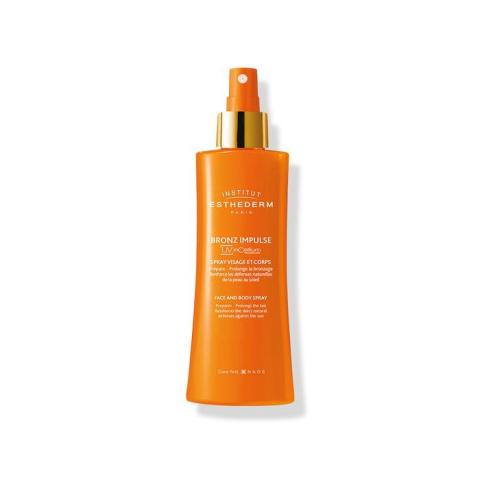
BRONZ IMPULSE
TLDR
Price:
CA$79.00Product Type:
CleanserFinish
NourishedClaims:
Brightening, Combination Skin, Dry Skin, Helps Skin Texture, Hydrating, Impoves Skin Barrier, Reduces HyperpigmentationInstructions
Spray on face and body and allow to dry. - Prepare: Use alone morning and evening, 15 days before the first exposure to the sun. - Stimulate: During exposure, apply 15 minutes before going out with a suitable sunscreen. - Extend: After exposure, spray morning and evening before your usual skin care.Product Description
TAN PREPARING, ACTIVATING AND PROLONGING SPRAY
Face and Body Spray that prepares the skin and optimizes the tanning. Bronz Impulse reinforces the skin's natural defenses and intensifies the tan of naturally tanned skin. With an invisible fresh mist texture, the skin appears visibly younger and the tan is more intense.
TAN PREPARING, ACTIVATING AND PROLONGING SPRAY
The skin appears better protected against external aggressions and better prepared for sun exposure. The tan is more intense, long-lasting and uniform.
PROVEN EFFICACY
CELLULAR WATER PATENT (*PATENT ISSUED IN FRANCE)
Water is the main component of a cosmetic product: therefore, its quality is essential. NAOS has designed a perfectly defined water, meeting the three fundamental criteria for physiological fluids: pH, oxidation resistance, and concentration of mineral salts. It optimises cellular functioning and preserves the balance of healthy skin. Components that can contribute to this patent: aqua/water/eau, disodium adenosine triphosphate, carnosine, laminaria digitata extract, aminoethanesulfinic acid, citric acid, as well as mineral salts.
ADAPTASUN TECHNOLOGY
This technology optimises the skin’s adaptation mechanisms and facilitates natural tanning.
GLOBAL CELLULAR PROTECTION PATENT (*PATENT ISSUED IN FRANCE)
This patented complex optimises the skin’s biological protection mechanisms, in particular its antioxidant properties and ability to protect cellular DNA.
HOW TO USE
Spray on face and body and allow to dry.
- Prepare: Use alone morning and evening, 15 days before the first exposure to the sun.
- Stimulate: During exposure, apply 15 minutes before going out with a suitable sunscreen.
- Extend: After exposure, spray morning and evening before your usual skin care.
Milky spray
Description
TAN PREPARING, ACTIVATING AND PROLONGING SPRAY
Face and Body Spray that prepares the skin and optimizes the tanning. Bronz Impulse reinforces the skin's natural defenses and intensifies the tan of naturally tanned skin. With an invisible fresh mist texture, the skin appears visibly younger and the tan is more intense.
TAN PREPARING, ACTIVATING AND PROLONGING SPRAY
The skin appears better protected against external aggressions and better prepared for sun exposure. The tan is more intense, long-lasting and uniform.
PROVEN EFFICACY
CELLULAR WATER PATENT (*PATENT ISSUED IN FRANCE)
Water is the main component of a cosmetic product: therefore, its quality is essential. NAOS has designed a perfectly defined water, meeting the three fundamental criteria for physiological fluids: pH, oxidation resistance, and concentration of mineral salts. It optimises cellular functioning and preserves the balance of healthy skin. Components that can contribute to this patent: aqua/water/eau, disodium adenosine triphosphate, carnosine, laminaria digitata extract, aminoethanesulfinic acid, citric acid, as well as mineral salts.
ADAPTASUN TECHNOLOGY
This technology optimises the skin’s adaptation mechanisms and facilitates natural tanning.
GLOBAL CELLULAR PROTECTION PATENT (*PATENT ISSUED IN FRANCE)
This patented complex optimises the skin’s biological protection mechanisms, in particular its antioxidant properties and ability to protect cellular DNA.
HOW TO USE
Spray on face and body and allow to dry.
- Prepare: Use alone morning and evening, 15 days before the first exposure to the sun.
- Stimulate: During exposure, apply 15 minutes before going out with a suitable sunscreen.
- Extend: After exposure, spray morning and evening before your usual skin care.
Milky spray
Ingredients:
- AQUA/WATER/EAU AQUA_WATER_EAU is commonly used as a base ingredient in cosmetics to provide hydration and improve the texture and spreadability of the product. It acts as a solvent for other ingredients and helps to deliver the active components of the product to the skin.
- GLYCERETH-26 Glycereth-26 is a versatile ingredient commonly used in cosmetics as a humectant and emollient, which helps to retain moisture and improve the texture and hydration of the skin and hair. Its lightweight and non-greasy nature allows for easy absorption, making it suitable for a range of products such as moisturizers, lotions, serums, and hair conditioners.
- PEG-11 METHYL ETHER DIMETHICONE PEG-11 Methyl Ether Dimethicone is commonly used in cosmetics as a conditioning agent and emollient. It helps to improve the texture and feel of the product, while also providing moisturizing benefits to the skin and hair.
- METHYLPROPANEDIOL METHYLPROPANEDIOL is commonly used in cosmetics as a conditioning agent and solvent. It helps to improve the texture of the product and enhance the absorption of other ingredients into the skin.
- PEG-40 HYDROGENATED CASTOR OIL PEG-40 Hydrogenated Castor Oil is commonly used as a surfactant and emulsifier in cosmetics, helping to improve the texture and stability of formulations. It also acts as a solubilizer, allowing for better dispersion of oil-soluble ingredients in water-based products.
- PYRUS MALUS (APPLE) FRUIT EXTRACT PYRUS MALUS (APPLE) FRUIT EXTRACT is commonly used in cosmetics for its antioxidant properties, which help to protect the skin from oxidative damage caused by free radicals. It also works as a natural exfoliant, helping to gently remove dead skin cells and promote a smoother, more radiant complexion.
- ACETYL TYROSINE Acetyl Tyrosine is a synthetic amino acid derivative used in cosmetics for its skin-conditioning properties. It is commonly added to formulations to help improve skin texture and promote a smoother, more youthful appearance.
- ASPARTIC ACID Aspartic acid is used in cosmetics as a conditioning agent and skin moisturizer. It helps to improve the texture and appearance of the skin by retaining moisture and promoting a smooth and supple complexion.
- CREATINE Creatine is commonly used in cosmetics as an ingredient that helps to improve the skin's hydration levels and promote a smoother and more even skin texture. Its moisturizing properties make it a popular choice in skincare products, particularly in anti-aging formulations.
- DIPOTASSIUM GLYCYRRHIZATE Dipotassium Glycyrrhizate, derived from licorice root, is often used in cosmetics as a skin conditioning agent and anti-inflammatory ingredient. It helps to soothe and calm irritated skin, while also enhancing the overall texture and appearance of the skin.
- MANNITOL Mannitol is a sugar alcohol used in cosmetics as a thickening agent and a humectant, helping to retain moisture in the skin. It adds texture to formulas and can also act as an antioxidant, protecting against free radicals.
- PHENOXYETHANOL Phenoxyethanol is a widely used cosmetic ingredient that functions as a preservative, helping to prevent the growth of microorganisms in beauty products. It is often included in skincare, haircare, and makeup formulations to enhance product stability and extend shelf life.
- SODIUM DEXTRAN SULFATE Sodium Dextran Sulfate is used in cosmetics as a thickening and emulsifying agent, helping to stabilize and improve the texture of various skincare and haircare products. Additionally, it can also have moisturizing properties, making it beneficial for hydrating formulas.
- CHLORPHENESIN Chlorphenesin is used in cosmetics as a preservative and antimicrobial agent to prevent the growth of bacteria and fungi, ensuring product stability and safety for consumers. It helps extend the shelf life of cosmetic formulations by inhibiting the growth of microorganisms that could cause contamination or spoilage.
- GLYCERIN Glycerin is widely used in cosmetics and personal care products due to its hydrating and emollient properties. It helps to attract and retain moisture in the skin, making it a popular ingredient in moisturizers, lotions, and creams. It can also be used as a humectant in
- disodium edta Disodium EDTA is a preservative commonly used in cosmetics, skincare, and beauty products. It helps to protect products from microbial growth, inhibit oxidation, and chelate metal ions. It can also help to stabilize the pH of cosmetic products and improve their shelf life. EDTA can also bind to
- IMPERATA CYLINDRICA ROOT EXTRACT IMPERATA CYLINDRICA ROOT EXTRACT is used in cosmetics for its moisturizing properties, as it helps to retain moisture in the skin and improve hydration. It can be found in various skincare products, such as moisturizers, serums, and masks.
- Sodium Hydroxide Sodium hydroxide is used in cosmetics as a neutralizing agent and pH adjuster. It is used to create a pH balance in products like shampoos, conditioners, and facial cleansers. Sodium hydroxide is also used to dissolve oils, proteins, and other ingredients in cosmetics, and
- HYDROLYZED SOY PROTEIN Hydrolyzed Soy Protein is commonly used in cosmetics as a conditioning agent and moisturizer. It helps to improve the appearance and texture of skin and hair by providing hydration and nourishment.
- POTASSIUM SORBATE Potassium Sorbate is commonly used as a preservative in cosmetics to inhibit the growth of bacteria, yeasts, and molds. It helps to extend the shelf life and maintain the quality of products such as creams, lotions, and hair care items.
- HYDROLYZED WHEAT PROTEIN Hydrolyzed wheat protein is commonly used in cosmetics as a conditioning agent and film-forming agent. It helps to improve the appearance and texture of skin and hair by providing moisture retention and protection.
- PROPYLENE GLYCOL Propylene Glycol is a versatile ingredient commonly used in cosmetics as a solvent, humectant, and emollient. It helps to retain moisture, enhance product texture, and improve the absorption of other ingredients.
- ALCOHOL Alcohol is commonly used in cosmetics as a solvent to help dissolve other ingredients, improve product texture, and enhance absorption. It is also used as a preservative to prevent microbial growth and extend the shelf life of various cosmetic formulations.
- FRAGRANCE (PARFUM) Fragrance (parfum) is a common ingredient used in cosmetics to provide a pleasant scent or mask unpleasant odors. It enhances the overall sensory experience of the product and can be found in various cosmetic products such as perfumes, lotions, and skincare items.
- PEG-8 PEG-8, a polyethylene glycol derivative, is commonly used in cosmetics as a humectant and emollient. It helps to retain moisture, improve hydration, and soften the skin, making it a popular ingredient in various skincare and haircare products.
- butylene glycol Butylene glycol is a clear, colorless liquid that is used as a humectant, solvent, and emulsifier in cosmetics. As a humectant, it helps to keep skin hydrated by drawing water from the air or deeper skin layers and locking it onto the surface of the skin.
- TRIS(TETRAMETHYLHYDROXYPIPERIDINOL) CITRATE TRIS(TETRAMETHYLHYDROXYPIPERIDINOL) CITRATE is used in cosmetics as an antioxidant and stabilizer, helping to prevent the breakdown of other ingredients due to exposure to air or sunlight. Additionally, it can also enhance the effectiveness of UV filters, making it a common ingredient in sunscreens and other protective skincare products.
- CAPRYLYL GLYCOL Caprylyl Glycol is a versatile cosmetic ingredient that is commonly used as a moisturizing agent, emollient, and preservative in cosmetics. It helps to condition and soften the skin, while also preventing the growth of bacteria and other microorganisms in beauty products.
- COPPER GLUCONATE Copper Gluconate is commonly used in cosmetics as a skin conditioning agent due to its ability to promote collagen synthesis and enhance skin elasticity. It is also known for its antioxidant properties, helping to protect the skin from free radical damage.
- CARNOSINE Carnosine is a naturally occurring amino acid that is often used in cosmetics for its anti-aging properties. It helps to reduce the appearance of wrinkles and fine lines by protecting the skin against the harmful effects of free radicals and promoting collagen production.
- ARTEMIA EXTRACT Artemia extract is commonly used in cosmetics as a skin conditioning and rejuvenating agent. It helps to improve the appearance of the skin by providing hydration, firmness, and a more youthful complexion.
- ethylhexylglycerin Ethylhexylglycerin is a synthetic skin-conditioning agent used in cosmetics. It works as a preservative, surfactant, and deodorant. Ethylhexylglycerin works to reduce the irritation of other ingredients and to increase the skin's ability to absorb moisture. It
- DEXTRAN Dextran is used in cosmetics as a conditioning agent and a moisturizer due to its ability to bind moisture to the skin and promote hydration. It can help improve the texture, smoothness, and overall appearance of the skin.
Ingredients
- AQUA/WATER/EAU AQUA_WATER_EAU is commonly used as a base ingredient in cosmetics to provide hydration and improve the texture and spreadability of the product. It acts as a solvent for other ingredients and helps to deliver the active components of the product to the skin.
- GLYCERETH-26 Glycereth-26 is a versatile ingredient commonly used in cosmetics as a humectant and emollient, which helps to retain moisture and improve the texture and hydration of the skin and hair. Its lightweight and non-greasy nature allows for easy absorption, making it suitable for a range of products such as moisturizers, lotions, serums, and hair conditioners.
- PEG-11 METHYL ETHER DIMETHICONE PEG-11 Methyl Ether Dimethicone is commonly used in cosmetics as a conditioning agent and emollient. It helps to improve the texture and feel of the product, while also providing moisturizing benefits to the skin and hair.
- METHYLPROPANEDIOL METHYLPROPANEDIOL is commonly used in cosmetics as a conditioning agent and solvent. It helps to improve the texture of the product and enhance the absorption of other ingredients into the skin.
- PEG-40 HYDROGENATED CASTOR OIL PEG-40 Hydrogenated Castor Oil is commonly used as a surfactant and emulsifier in cosmetics, helping to improve the texture and stability of formulations. It also acts as a solubilizer, allowing for better dispersion of oil-soluble ingredients in water-based products.
- PYRUS MALUS (APPLE) FRUIT EXTRACT PYRUS MALUS (APPLE) FRUIT EXTRACT is commonly used in cosmetics for its antioxidant properties, which help to protect the skin from oxidative damage caused by free radicals. It also works as a natural exfoliant, helping to gently remove dead skin cells and promote a smoother, more radiant complexion.
- ACETYL TYROSINE Acetyl Tyrosine is a synthetic amino acid derivative used in cosmetics for its skin-conditioning properties. It is commonly added to formulations to help improve skin texture and promote a smoother, more youthful appearance.
- ASPARTIC ACID Aspartic acid is used in cosmetics as a conditioning agent and skin moisturizer. It helps to improve the texture and appearance of the skin by retaining moisture and promoting a smooth and supple complexion.
- CREATINE Creatine is commonly used in cosmetics as an ingredient that helps to improve the skin's hydration levels and promote a smoother and more even skin texture. Its moisturizing properties make it a popular choice in skincare products, particularly in anti-aging formulations.
- DIPOTASSIUM GLYCYRRHIZATE Dipotassium Glycyrrhizate, derived from licorice root, is often used in cosmetics as a skin conditioning agent and anti-inflammatory ingredient. It helps to soothe and calm irritated skin, while also enhancing the overall texture and appearance of the skin.
- MANNITOL Mannitol is a sugar alcohol used in cosmetics as a thickening agent and a humectant, helping to retain moisture in the skin. It adds texture to formulas and can also act as an antioxidant, protecting against free radicals.
- PHENOXYETHANOL Phenoxyethanol is a widely used cosmetic ingredient that functions as a preservative, helping to prevent the growth of microorganisms in beauty products. It is often included in skincare, haircare, and makeup formulations to enhance product stability and extend shelf life.
- SODIUM DEXTRAN SULFATE Sodium Dextran Sulfate is used in cosmetics as a thickening and emulsifying agent, helping to stabilize and improve the texture of various skincare and haircare products. Additionally, it can also have moisturizing properties, making it beneficial for hydrating formulas.
- CHLORPHENESIN Chlorphenesin is used in cosmetics as a preservative and antimicrobial agent to prevent the growth of bacteria and fungi, ensuring product stability and safety for consumers. It helps extend the shelf life of cosmetic formulations by inhibiting the growth of microorganisms that could cause contamination or spoilage.
- GLYCERIN Glycerin is widely used in cosmetics and personal care products due to its hydrating and emollient properties. It helps to attract and retain moisture in the skin, making it a popular ingredient in moisturizers, lotions, and creams. It can also be used as a humectant in
- disodium edta Disodium EDTA is a preservative commonly used in cosmetics, skincare, and beauty products. It helps to protect products from microbial growth, inhibit oxidation, and chelate metal ions. It can also help to stabilize the pH of cosmetic products and improve their shelf life. EDTA can also bind to
- IMPERATA CYLINDRICA ROOT EXTRACT IMPERATA CYLINDRICA ROOT EXTRACT is used in cosmetics for its moisturizing properties, as it helps to retain moisture in the skin and improve hydration. It can be found in various skincare products, such as moisturizers, serums, and masks.
- Sodium Hydroxide Sodium hydroxide is used in cosmetics as a neutralizing agent and pH adjuster. It is used to create a pH balance in products like shampoos, conditioners, and facial cleansers. Sodium hydroxide is also used to dissolve oils, proteins, and other ingredients in cosmetics, and
- HYDROLYZED SOY PROTEIN Hydrolyzed Soy Protein is commonly used in cosmetics as a conditioning agent and moisturizer. It helps to improve the appearance and texture of skin and hair by providing hydration and nourishment.
- POTASSIUM SORBATE Potassium Sorbate is commonly used as a preservative in cosmetics to inhibit the growth of bacteria, yeasts, and molds. It helps to extend the shelf life and maintain the quality of products such as creams, lotions, and hair care items.
- HYDROLYZED WHEAT PROTEIN Hydrolyzed wheat protein is commonly used in cosmetics as a conditioning agent and film-forming agent. It helps to improve the appearance and texture of skin and hair by providing moisture retention and protection.
- PROPYLENE GLYCOL Propylene Glycol is a versatile ingredient commonly used in cosmetics as a solvent, humectant, and emollient. It helps to retain moisture, enhance product texture, and improve the absorption of other ingredients.
- ALCOHOL Alcohol is commonly used in cosmetics as a solvent to help dissolve other ingredients, improve product texture, and enhance absorption. It is also used as a preservative to prevent microbial growth and extend the shelf life of various cosmetic formulations.
- FRAGRANCE (PARFUM) Fragrance (parfum) is a common ingredient used in cosmetics to provide a pleasant scent or mask unpleasant odors. It enhances the overall sensory experience of the product and can be found in various cosmetic products such as perfumes, lotions, and skincare items.
- PEG-8 PEG-8, a polyethylene glycol derivative, is commonly used in cosmetics as a humectant and emollient. It helps to retain moisture, improve hydration, and soften the skin, making it a popular ingredient in various skincare and haircare products.
- butylene glycol Butylene glycol is a clear, colorless liquid that is used as a humectant, solvent, and emulsifier in cosmetics. As a humectant, it helps to keep skin hydrated by drawing water from the air or deeper skin layers and locking it onto the surface of the skin.
- TRIS(TETRAMETHYLHYDROXYPIPERIDINOL) CITRATE TRIS(TETRAMETHYLHYDROXYPIPERIDINOL) CITRATE is used in cosmetics as an antioxidant and stabilizer, helping to prevent the breakdown of other ingredients due to exposure to air or sunlight. Additionally, it can also enhance the effectiveness of UV filters, making it a common ingredient in sunscreens and other protective skincare products.
- CAPRYLYL GLYCOL Caprylyl Glycol is a versatile cosmetic ingredient that is commonly used as a moisturizing agent, emollient, and preservative in cosmetics. It helps to condition and soften the skin, while also preventing the growth of bacteria and other microorganisms in beauty products.
- COPPER GLUCONATE Copper Gluconate is commonly used in cosmetics as a skin conditioning agent due to its ability to promote collagen synthesis and enhance skin elasticity. It is also known for its antioxidant properties, helping to protect the skin from free radical damage.
- CARNOSINE Carnosine is a naturally occurring amino acid that is often used in cosmetics for its anti-aging properties. It helps to reduce the appearance of wrinkles and fine lines by protecting the skin against the harmful effects of free radicals and promoting collagen production.
- ARTEMIA EXTRACT Artemia extract is commonly used in cosmetics as a skin conditioning and rejuvenating agent. It helps to improve the appearance of the skin by providing hydration, firmness, and a more youthful complexion.
- ethylhexylglycerin Ethylhexylglycerin is a synthetic skin-conditioning agent used in cosmetics. It works as a preservative, surfactant, and deodorant. Ethylhexylglycerin works to reduce the irritation of other ingredients and to increase the skin's ability to absorb moisture. It
- DEXTRAN Dextran is used in cosmetics as a conditioning agent and a moisturizer due to its ability to bind moisture to the skin and promote hydration. It can help improve the texture, smoothness, and overall appearance of the skin.