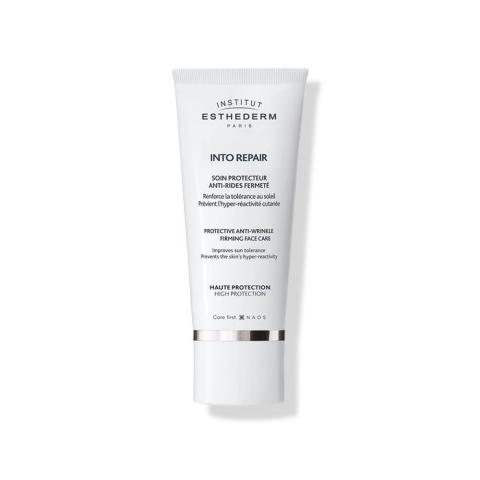
INTO REPAIR ANTI-WRINKLES FACE CREAM
TLDR
Price:
CA$99.00Product Type:
CleanserFinish
NourishedClaims:
Brightening, For Sensitive Skin, Moisurizing, Dry Skin, Calms Skin, Reduces Appearance of Wrinkels, Prevents Wrinkel FormationInstructions
Apply on face, neck and décolleté 15 minutes before going outside and then every two hours and immediately after bathing for maximum hydration.Product Description
Firming cream diminishes wrinkles appearance, reduces sensitivity of hyper-reactive dry skin. Its creamy non-greasy texture is soft, comfortable and smooth to the touch. Fragrance-free formula.
Intolerance reaction are limited. Fine line and wrinkles seem smoothed out. Dry skin is soothed, firm and ideally hydrated.
PROVEN EFFICACY
The cutaneous intolerance reactions are limited: 90%*
The skin sensitivity is attenuated during sun exposure: 85%*
*Use test on 20 volunteers after 14 days
CELLULAR WATER PATENT (*PATENT ISSUED IN FRANCE)
Water is the main component of a cosmetic product: therefore, its quality is essential. NAOS has designed a perfectly defined water, meeting the three fundamental criteria for physiological fluids: pH, oxidation resistance, and concentration of mineral salts. It optimises cellular functioning and preserves the balance of healthy skin. Components that can contribute to this patent: aqua/water/eau, disodium adenosine triphosphate, carnosine, laminaria digitata extract, aminoethanesulfinic acid, citric acid, as well as mineral salts.
GLOBAL CELLULAR PROTECTION PATENT (*PATENT ISSUED IN FRANCE)
This patented complex optimises the skin’s biological protection mechanisms, in particular its antioxidant properties and ability to protect cellular DNA.
REPAIR TECHNOLOGY
This technology visibly reduces the signs of aging.
HOW TO USE
Apply on face, neck and décolleté 15 minutes before going outside and then every two hours and immediately after bathing for maximum hydration.
Soft, rich cream
Description
Firming cream diminishes wrinkles appearance, reduces sensitivity of hyper-reactive dry skin. Its creamy non-greasy texture is soft, comfortable and smooth to the touch. Fragrance-free formula.
Intolerance reaction are limited. Fine line and wrinkles seem smoothed out. Dry skin is soothed, firm and ideally hydrated.
PROVEN EFFICACY
The cutaneous intolerance reactions are limited: 90%*
The skin sensitivity is attenuated during sun exposure: 85%*
*Use test on 20 volunteers after 14 days
CELLULAR WATER PATENT (*PATENT ISSUED IN FRANCE)
Water is the main component of a cosmetic product: therefore, its quality is essential. NAOS has designed a perfectly defined water, meeting the three fundamental criteria for physiological fluids: pH, oxidation resistance, and concentration of mineral salts. It optimises cellular functioning and preserves the balance of healthy skin. Components that can contribute to this patent: aqua/water/eau, disodium adenosine triphosphate, carnosine, laminaria digitata extract, aminoethanesulfinic acid, citric acid, as well as mineral salts.
GLOBAL CELLULAR PROTECTION PATENT (*PATENT ISSUED IN FRANCE)
This patented complex optimises the skin’s biological protection mechanisms, in particular its antioxidant properties and ability to protect cellular DNA.
REPAIR TECHNOLOGY
This technology visibly reduces the signs of aging.
HOW TO USE
Apply on face, neck and décolleté 15 minutes before going outside and then every two hours and immediately after bathing for maximum hydration.
Soft, rich cream
Ingredients:
- AQUA/WATER/EAU AQUA_WATER_EAU is commonly used as a base ingredient in cosmetics to provide hydration and improve the texture and spreadability of the product. It acts as a solvent for other ingredients and helps to deliver the active components of the product to the skin.
- HOMOSALATE Homosalate is a common ingredient used in sunscreen and other cosmetic products as a UV filter to absorb and block harmful UVA and UVB rays from the sun, providing protection against sunburn and premature aging of the skin.
- ETHYLHEXYL METHOXYCRYLENE ETHYLHEXYL METHOXYCRYLENE is a chemical compound commonly used as a UV filter in cosmetics, particularly in sunscreens, to provide broad-spectrum protection against harmful UV rays. It helps to absorb and dissipate UV radiation, reducing the risk of skin damage and premature aging caused by sun exposure.
- GLYCERIN Glycerin is widely used in cosmetics and personal care products due to its hydrating and emollient properties. It helps to attract and retain moisture in the skin, making it a popular ingredient in moisturizers, lotions, and creams. It can also be used as a humectant in
- ETHYLHEXYL SALICYLATE Ethylhexyl salicylate, a type of organic UV filter, is commonly used in cosmetics as a sunscreen agent to protect the skin from harmful UV radiation. It absorbs UVB rays and helps to prevent sunburn and premature aging of the skin.
- BUTYLOCTYL SALICYLATE Butyloctyl Salicylate is commonly used in cosmetics as an emollient and sunscreen agent. It helps to soften and smooth the skin while providing protection against harmful UV rays.
- TRIBEHENIN PEG-20 ESTERS TRIBEHENIN PEG-20 ESTERS is commonly used in cosmetics as an emollient and skin conditioning agent. It helps to soften and smooth the skin, enhancing the overall texture and appearance of products.
- BUTYL METHOXYDIBENZOYLMETHANE BUTYL METHOXYDIBENZOYLMETHANE, also known as Avobenzone, is commonly used in cosmetics and sunscreens as a chemical ingredient to absorb and block harmful UVA rays from the sun, helping to protect the skin from sun damage and premature aging. It provides broad-spectrum protection and is often combined with other UV filters to enhance the efficacy of sun protection products.
- PENTYLENE GLYCOL Pentylene Glycol is commonly used in cosmetics as a humectant and solvent, helping to retain moisture and improve the texture of skincare products. It also has antimicrobial properties, making it useful as a preservative to extend the shelf life of cosmetic formulations.
- COCO-CAPRYLATE/CAPRATE COCO-CAPRYLATE_CAPRATE is commonly used in cosmetics as a natural emollient and skin conditioning agent. It helps to moisturize and soften the skin, while also providing a light and non-greasy texture to cosmetic formulations.
- Dimethicone Dimethicone is a silicone-based polymer used as an emollient and skin protectant in cosmetics. It is often used in makeup, lotions, and other skincare products to provide a slippery feeling and to fill in fine lines and wrinkles. It also helps to protect the skin from environmental irrit
- TOCOPHERYL ACETATE Tocopheryl Acetate, also known as Vitamin E Acetate, is commonly used in cosmetics as an antioxidant and a skin-conditioning agent. It helps to protect the skin from free radicals, moisturizes, and improves the overall texture and appearance of the skin.
- BENZOTRIAZOLYL DODECYL P-CRESOL Benzotriazolyl Dodecyl P-Cresol is commonly used in cosmetics as a UV absorber and antioxidant. It helps to protect the skin from harmful UV radiation and prevent premature aging caused by free radicals.
- CETEARYL ALCOHOL Cetearyl Alcohol is a type of fatty alcohol used as an emollient, emulsifier, thickener, and opacifying agent in cosmetics and personal care products. It is usually derived from plant sources, such as coconut and palm oils, and can be either synthetic or naturally derived. It
- VP/EICOSENE COPOLYMER VP/Eicosene Copolymer is commonly used in cosmetics as a film-forming agent and binder. It helps products adhere to the skin and provides a long-lasting and waterproof finish.
- C20-22 ALKYL PHOSPHATE C20-22 Alkyl Phosphate is commonly used in cosmetics as an emulsifier and surfactant. It helps to stabilize and blend different ingredients together, while also enhancing the texture and spreadability of cosmetic products.
- CREATINE Creatine is commonly used in cosmetics as an ingredient that helps to improve the skin's hydration levels and promote a smoother and more even skin texture. Its moisturizing properties make it a popular choice in skincare products, particularly in anti-aging formulations.
- GLYCERYL STEARATE Glyceryl stearate is commonly used in cosmetics as an emulsifier and stabilizer, helping to blend oil and water-based ingredients together and maintain the texture and consistency of the product. It also acts as a conditioning agent, making skin and hair feel softer and smoother.
- GLYCYRRHETINIC ACID Glycyrrhetinic Acid, derived from licorice root, is used in cosmetics for its skin-soothing and anti-inflammatory properties. It helps to calm and alleviate skin irritations, making it a popular ingredient in skincare products targeted at sensitive or reactive skin types.
- MANNITOL Mannitol is a sugar alcohol used in cosmetics as a thickening agent and a humectant, helping to retain moisture in the skin. It adds texture to formulas and can also act as an antioxidant, protecting against free radicals.
- PEG-100 STEARATE PEG-100 Stearate is a key ingredient commonly used in cosmetics as an emulsifier and surfactant. It helps to stabilize and blend the ingredients in a product, allowing for a smooth and even texture, as well as enhancing its ability to cleanse and spread on the skin.
- C20-22 ALCOHOLS C20-22 Alcohols are commonly used in cosmetics as emollients and texture enhancers. They help to moisturize and soften the skin, while also improving the overall texture and feel of the product.
- SODIUM DEXTRAN SULFATE Sodium Dextran Sulfate is used in cosmetics as a thickening and emulsifying agent, helping to stabilize and improve the texture of various skincare and haircare products. Additionally, it can also have moisturizing properties, making it beneficial for hydrating formulas.
- butylene glycol Butylene glycol is a clear, colorless liquid that is used as a humectant, solvent, and emulsifier in cosmetics. As a humectant, it helps to keep skin hydrated by drawing water from the air or deeper skin layers and locking it onto the surface of the skin.
- HYDROXYETHYL ACRYLATE/SODIUM ACRYLOYLDIMETHYL TAURATE COPOLYMER HYDROXYETHYL ACRYLATE/SODIUM ACRYLOYLDIMETHYL TAURATE COPOLYMER is commonly used in cosmetics as a thickening agent, stabilizer, and emulsifier. It helps to improve the texture and consistency of products while also enhancing their overall performance and shelf life.
- XANTHAN GUM Xanthan gum is a polysaccharide gum that is used in cosmetics and beauty products as a thickening agent, stabilizer, emulsifier, and suspending agent. It helps to increase the viscosity of a product, preventing separation of ingredients and allowing them to blend together more easily. It
- POLYSILICONE-11 POLYSILICONE-11 is a silicone-based ingredient commonly used in cosmetics for its smooth and silky texture. It helps to enhance the spreadability of products and acts as a film-forming agent, providing a protective barrier on the skin.
- CAPRYLYL GLYCOL Caprylyl Glycol is a versatile cosmetic ingredient that is commonly used as a moisturizing agent, emollient, and preservative in cosmetics. It helps to condition and soften the skin, while also preventing the growth of bacteria and other microorganisms in beauty products.
- 1,2-hexanediol 1,2-Hexanediol is a humectant, meaning it attracts and binds moisture to the skin. It is often used in cosmetics because it helps to keep the skin hydrated and prevents moisture from evaporating. It is also an emollient, meaning it softens and soothes the
- SODIUM CITRATE Sodium citrate is commonly used in cosmetics as a buffering agent and pH adjuster. It helps stabilize formulas and control the acidity levels of various skincare and haircare products.
- HYDROLYZED SOY PROTEIN Hydrolyzed Soy Protein is commonly used in cosmetics as a conditioning agent and moisturizer. It helps to improve the appearance and texture of skin and hair by providing hydration and nourishment.
- PENTAERYTHRITYL TETRA-DI-T-BUTYL HYDROXYHYDROCINNAMATE PENTAERYTHRITYL TETRA-DI-T-BUTYL HYDROXYHYDROCINNAMATE, also known as PTTH, is commonly used as an antioxidant in cosmetics to prevent the degradation of other ingredients caused by exposure to light and air. It helps to extend the shelf life of products and maintain their quality.
- HYDROLYZED WHEAT PROTEIN Hydrolyzed wheat protein is commonly used in cosmetics as a conditioning agent and film-forming agent. It helps to improve the appearance and texture of skin and hair by providing moisture retention and protection.
- PROPYLENE GLYCOL Propylene Glycol is a versatile ingredient commonly used in cosmetics as a solvent, humectant, and emollient. It helps to retain moisture, enhance product texture, and improve the absorption of other ingredients.
- PHENOXYETHANOL Phenoxyethanol is a widely used cosmetic ingredient that functions as a preservative, helping to prevent the growth of microorganisms in beauty products. It is often included in skincare, haircare, and makeup formulations to enhance product stability and extend shelf life.
- Sodium Hydroxide Sodium hydroxide is used in cosmetics as a neutralizing agent and pH adjuster. It is used to create a pH balance in products like shampoos, conditioners, and facial cleansers. Sodium hydroxide is also used to dissolve oils, proteins, and other ingredients in cosmetics, and
- POLYSORBATE 60 Polysorbate 60 is a surfactant and emulsifier commonly used in cosmetics. It helps to mix oil and water-based ingredients, stabilize formulas, and improve the texture and consistency of products.
- SORBITAN ISOSTEARATE Sorbitan Isostearate is commonly used in cosmetics as an emulsifying agent and surfactant, helping to blend oil and water-based ingredients together and improve the texture and stability of formulas. It can be found in various skincare, haircare, and makeup products, such as creams, lotions, serums, and lipsticks.
- ALCOHOL Alcohol is commonly used in cosmetics as a solvent to help dissolve other ingredients, improve product texture, and enhance absorption. It is also used as a preservative to prevent microbial growth and extend the shelf life of various cosmetic formulations.
- CARBOMER Carbomer is a group of synthetic polymers that are commonly used in cosmetics as thickening agents and stabilizers. They help improve the texture and viscosity of products such as creams, lotions, and gels, making them easier to apply and enhancing their overall performance.
- SODIUM LACTATE Sodium lactate is commonly used in cosmetics as a humectant, helping to attract and retain moisture to the skin. It also acts as a pH regulator, helping to maintain the product's acidity or alkalinity levels.
- TRIS(TETRAMETHYLHYDROXYPIPERIDINOL) CITRATE TRIS(TETRAMETHYLHYDROXYPIPERIDINOL) CITRATE is used in cosmetics as an antioxidant and stabilizer, helping to prevent the breakdown of other ingredients due to exposure to air or sunlight. Additionally, it can also enhance the effectiveness of UV filters, making it a common ingredient in sunscreens and other protective skincare products.
- POLYSORBATE 20 Polysorbate 20 is commonly used as an emulsifier in cosmetics, helping to blend oil and water-based ingredients together. It also acts as a gentle cleanser and is often found in skincare products, hair care products, and personal care items.
- CARNOSINE Carnosine is a naturally occurring amino acid that is often used in cosmetics for its anti-aging properties. It helps to reduce the appearance of wrinkles and fine lines by protecting the skin against the harmful effects of free radicals and promoting collagen production.
- ASIATICOSIDE Asiaticoside is a natural compound derived from the Centella asiatica plant, commonly used in cosmetics for its skin-soothing and anti-inflammatory properties. It aids in the repair of damaged skin, promotes collagen synthesis, and helps to improve the appearance of scars and blemishes.
- MADECASSIC ACID Madecassic acid is a naturally derived compound found in Centella asiatica plants. It is known for its soothing and healing properties, making it a popular ingredient in cosmetics aimed at reducing inflammation, promoting wound healing, and improving skin barrier function.
- ARTEMIA EXTRACT Artemia extract is commonly used in cosmetics as a skin conditioning and rejuvenating agent. It helps to improve the appearance of the skin by providing hydration, firmness, and a more youthful complexion.
- ASIATIC ACID Asiatic acid is a naturally occurring compound derived from Centella asiatica, commonly used in cosmetics for its anti-inflammatory and wound healing properties. It helps to soothe and repair the skin, making it a popular ingredient in skincare products targeting inflammation and promoting skin rejuvenation.
- DISODIUM ADENOSINE TRIPHOSPHATE Disodium Adenosine is a cosmetic ingredient commonly used as a skin-conditioning agent. It helps to improve the texture and appearance of the skin by providing hydration and promoting a smooth and youthful complexion.
- LAMINARIA DIGITATA EXTRACT Laminaria Digitata Extract is commonly used in cosmetics for its hydrating and nourishing properties. It helps to keep the skin moisturized, smooth, and youthful-looking, making it a popular ingredient in skincare products.
- TOCOPHEROL Tocopherol is used in cosmetics as a natural antioxidant ingredient that helps protect the skin from free radicals and environmental damage. It also acts as a moisturizer, helping to promote a smoother and more hydrated complexion.
- PALMITOYL TRIPEPTIDE-1 PALMITOYL TRIPEPTIDE-1 is a synthetic peptide that is commonly used in cosmetics for its anti-aging properties. It helps stimulate collagen production, improving the overall appearance of fine lines and wrinkles in the skin.
- PALMITOYL TETRAPEPTIDE-7 PALMITOYL TETRAPEPTIDE-7 is commonly used in cosmetics as a peptide that helps to reduce the appearance of wrinkles and improve the firmness of the skin. It works by stimulating collagen production and promoting the regeneration of skin cells.
Ingredients
- AQUA/WATER/EAU AQUA_WATER_EAU is commonly used as a base ingredient in cosmetics to provide hydration and improve the texture and spreadability of the product. It acts as a solvent for other ingredients and helps to deliver the active components of the product to the skin.
- HOMOSALATE Homosalate is a common ingredient used in sunscreen and other cosmetic products as a UV filter to absorb and block harmful UVA and UVB rays from the sun, providing protection against sunburn and premature aging of the skin.
- ETHYLHEXYL METHOXYCRYLENE ETHYLHEXYL METHOXYCRYLENE is a chemical compound commonly used as a UV filter in cosmetics, particularly in sunscreens, to provide broad-spectrum protection against harmful UV rays. It helps to absorb and dissipate UV radiation, reducing the risk of skin damage and premature aging caused by sun exposure.
- GLYCERIN Glycerin is widely used in cosmetics and personal care products due to its hydrating and emollient properties. It helps to attract and retain moisture in the skin, making it a popular ingredient in moisturizers, lotions, and creams. It can also be used as a humectant in
- ETHYLHEXYL SALICYLATE Ethylhexyl salicylate, a type of organic UV filter, is commonly used in cosmetics as a sunscreen agent to protect the skin from harmful UV radiation. It absorbs UVB rays and helps to prevent sunburn and premature aging of the skin.
- BUTYLOCTYL SALICYLATE Butyloctyl Salicylate is commonly used in cosmetics as an emollient and sunscreen agent. It helps to soften and smooth the skin while providing protection against harmful UV rays.
- TRIBEHENIN PEG-20 ESTERS TRIBEHENIN PEG-20 ESTERS is commonly used in cosmetics as an emollient and skin conditioning agent. It helps to soften and smooth the skin, enhancing the overall texture and appearance of products.
- BUTYL METHOXYDIBENZOYLMETHANE BUTYL METHOXYDIBENZOYLMETHANE, also known as Avobenzone, is commonly used in cosmetics and sunscreens as a chemical ingredient to absorb and block harmful UVA rays from the sun, helping to protect the skin from sun damage and premature aging. It provides broad-spectrum protection and is often combined with other UV filters to enhance the efficacy of sun protection products.
- PENTYLENE GLYCOL Pentylene Glycol is commonly used in cosmetics as a humectant and solvent, helping to retain moisture and improve the texture of skincare products. It also has antimicrobial properties, making it useful as a preservative to extend the shelf life of cosmetic formulations.
- COCO-CAPRYLATE/CAPRATE COCO-CAPRYLATE_CAPRATE is commonly used in cosmetics as a natural emollient and skin conditioning agent. It helps to moisturize and soften the skin, while also providing a light and non-greasy texture to cosmetic formulations.
- Dimethicone Dimethicone is a silicone-based polymer used as an emollient and skin protectant in cosmetics. It is often used in makeup, lotions, and other skincare products to provide a slippery feeling and to fill in fine lines and wrinkles. It also helps to protect the skin from environmental irrit
- TOCOPHERYL ACETATE Tocopheryl Acetate, also known as Vitamin E Acetate, is commonly used in cosmetics as an antioxidant and a skin-conditioning agent. It helps to protect the skin from free radicals, moisturizes, and improves the overall texture and appearance of the skin.
- BENZOTRIAZOLYL DODECYL P-CRESOL Benzotriazolyl Dodecyl P-Cresol is commonly used in cosmetics as a UV absorber and antioxidant. It helps to protect the skin from harmful UV radiation and prevent premature aging caused by free radicals.
- CETEARYL ALCOHOL Cetearyl Alcohol is a type of fatty alcohol used as an emollient, emulsifier, thickener, and opacifying agent in cosmetics and personal care products. It is usually derived from plant sources, such as coconut and palm oils, and can be either synthetic or naturally derived. It
- VP/EICOSENE COPOLYMER VP/Eicosene Copolymer is commonly used in cosmetics as a film-forming agent and binder. It helps products adhere to the skin and provides a long-lasting and waterproof finish.
- C20-22 ALKYL PHOSPHATE C20-22 Alkyl Phosphate is commonly used in cosmetics as an emulsifier and surfactant. It helps to stabilize and blend different ingredients together, while also enhancing the texture and spreadability of cosmetic products.
- CREATINE Creatine is commonly used in cosmetics as an ingredient that helps to improve the skin's hydration levels and promote a smoother and more even skin texture. Its moisturizing properties make it a popular choice in skincare products, particularly in anti-aging formulations.
- GLYCERYL STEARATE Glyceryl stearate is commonly used in cosmetics as an emulsifier and stabilizer, helping to blend oil and water-based ingredients together and maintain the texture and consistency of the product. It also acts as a conditioning agent, making skin and hair feel softer and smoother.
- GLYCYRRHETINIC ACID Glycyrrhetinic Acid, derived from licorice root, is used in cosmetics for its skin-soothing and anti-inflammatory properties. It helps to calm and alleviate skin irritations, making it a popular ingredient in skincare products targeted at sensitive or reactive skin types.
- MANNITOL Mannitol is a sugar alcohol used in cosmetics as a thickening agent and a humectant, helping to retain moisture in the skin. It adds texture to formulas and can also act as an antioxidant, protecting against free radicals.
- PEG-100 STEARATE PEG-100 Stearate is a key ingredient commonly used in cosmetics as an emulsifier and surfactant. It helps to stabilize and blend the ingredients in a product, allowing for a smooth and even texture, as well as enhancing its ability to cleanse and spread on the skin.
- C20-22 ALCOHOLS C20-22 Alcohols are commonly used in cosmetics as emollients and texture enhancers. They help to moisturize and soften the skin, while also improving the overall texture and feel of the product.
- SODIUM DEXTRAN SULFATE Sodium Dextran Sulfate is used in cosmetics as a thickening and emulsifying agent, helping to stabilize and improve the texture of various skincare and haircare products. Additionally, it can also have moisturizing properties, making it beneficial for hydrating formulas.
- butylene glycol Butylene glycol is a clear, colorless liquid that is used as a humectant, solvent, and emulsifier in cosmetics. As a humectant, it helps to keep skin hydrated by drawing water from the air or deeper skin layers and locking it onto the surface of the skin.
- HYDROXYETHYL ACRYLATE/SODIUM ACRYLOYLDIMETHYL TAURATE COPOLYMER HYDROXYETHYL ACRYLATE/SODIUM ACRYLOYLDIMETHYL TAURATE COPOLYMER is commonly used in cosmetics as a thickening agent, stabilizer, and emulsifier. It helps to improve the texture and consistency of products while also enhancing their overall performance and shelf life.
- XANTHAN GUM Xanthan gum is a polysaccharide gum that is used in cosmetics and beauty products as a thickening agent, stabilizer, emulsifier, and suspending agent. It helps to increase the viscosity of a product, preventing separation of ingredients and allowing them to blend together more easily. It
- POLYSILICONE-11 POLYSILICONE-11 is a silicone-based ingredient commonly used in cosmetics for its smooth and silky texture. It helps to enhance the spreadability of products and acts as a film-forming agent, providing a protective barrier on the skin.
- CAPRYLYL GLYCOL Caprylyl Glycol is a versatile cosmetic ingredient that is commonly used as a moisturizing agent, emollient, and preservative in cosmetics. It helps to condition and soften the skin, while also preventing the growth of bacteria and other microorganisms in beauty products.
- 1,2-hexanediol 1,2-Hexanediol is a humectant, meaning it attracts and binds moisture to the skin. It is often used in cosmetics because it helps to keep the skin hydrated and prevents moisture from evaporating. It is also an emollient, meaning it softens and soothes the
- SODIUM CITRATE Sodium citrate is commonly used in cosmetics as a buffering agent and pH adjuster. It helps stabilize formulas and control the acidity levels of various skincare and haircare products.
- HYDROLYZED SOY PROTEIN Hydrolyzed Soy Protein is commonly used in cosmetics as a conditioning agent and moisturizer. It helps to improve the appearance and texture of skin and hair by providing hydration and nourishment.
- PENTAERYTHRITYL TETRA-DI-T-BUTYL HYDROXYHYDROCINNAMATE PENTAERYTHRITYL TETRA-DI-T-BUTYL HYDROXYHYDROCINNAMATE, also known as PTTH, is commonly used as an antioxidant in cosmetics to prevent the degradation of other ingredients caused by exposure to light and air. It helps to extend the shelf life of products and maintain their quality.
- HYDROLYZED WHEAT PROTEIN Hydrolyzed wheat protein is commonly used in cosmetics as a conditioning agent and film-forming agent. It helps to improve the appearance and texture of skin and hair by providing moisture retention and protection.
- PROPYLENE GLYCOL Propylene Glycol is a versatile ingredient commonly used in cosmetics as a solvent, humectant, and emollient. It helps to retain moisture, enhance product texture, and improve the absorption of other ingredients.
- PHENOXYETHANOL Phenoxyethanol is a widely used cosmetic ingredient that functions as a preservative, helping to prevent the growth of microorganisms in beauty products. It is often included in skincare, haircare, and makeup formulations to enhance product stability and extend shelf life.
- Sodium Hydroxide Sodium hydroxide is used in cosmetics as a neutralizing agent and pH adjuster. It is used to create a pH balance in products like shampoos, conditioners, and facial cleansers. Sodium hydroxide is also used to dissolve oils, proteins, and other ingredients in cosmetics, and
- POLYSORBATE 60 Polysorbate 60 is a surfactant and emulsifier commonly used in cosmetics. It helps to mix oil and water-based ingredients, stabilize formulas, and improve the texture and consistency of products.
- SORBITAN ISOSTEARATE Sorbitan Isostearate is commonly used in cosmetics as an emulsifying agent and surfactant, helping to blend oil and water-based ingredients together and improve the texture and stability of formulas. It can be found in various skincare, haircare, and makeup products, such as creams, lotions, serums, and lipsticks.
- ALCOHOL Alcohol is commonly used in cosmetics as a solvent to help dissolve other ingredients, improve product texture, and enhance absorption. It is also used as a preservative to prevent microbial growth and extend the shelf life of various cosmetic formulations.
- CARBOMER Carbomer is a group of synthetic polymers that are commonly used in cosmetics as thickening agents and stabilizers. They help improve the texture and viscosity of products such as creams, lotions, and gels, making them easier to apply and enhancing their overall performance.
- SODIUM LACTATE Sodium lactate is commonly used in cosmetics as a humectant, helping to attract and retain moisture to the skin. It also acts as a pH regulator, helping to maintain the product's acidity or alkalinity levels.
- TRIS(TETRAMETHYLHYDROXYPIPERIDINOL) CITRATE TRIS(TETRAMETHYLHYDROXYPIPERIDINOL) CITRATE is used in cosmetics as an antioxidant and stabilizer, helping to prevent the breakdown of other ingredients due to exposure to air or sunlight. Additionally, it can also enhance the effectiveness of UV filters, making it a common ingredient in sunscreens and other protective skincare products.
- POLYSORBATE 20 Polysorbate 20 is commonly used as an emulsifier in cosmetics, helping to blend oil and water-based ingredients together. It also acts as a gentle cleanser and is often found in skincare products, hair care products, and personal care items.
- CARNOSINE Carnosine is a naturally occurring amino acid that is often used in cosmetics for its anti-aging properties. It helps to reduce the appearance of wrinkles and fine lines by protecting the skin against the harmful effects of free radicals and promoting collagen production.
- ASIATICOSIDE Asiaticoside is a natural compound derived from the Centella asiatica plant, commonly used in cosmetics for its skin-soothing and anti-inflammatory properties. It aids in the repair of damaged skin, promotes collagen synthesis, and helps to improve the appearance of scars and blemishes.
- MADECASSIC ACID Madecassic acid is a naturally derived compound found in Centella asiatica plants. It is known for its soothing and healing properties, making it a popular ingredient in cosmetics aimed at reducing inflammation, promoting wound healing, and improving skin barrier function.
- ARTEMIA EXTRACT Artemia extract is commonly used in cosmetics as a skin conditioning and rejuvenating agent. It helps to improve the appearance of the skin by providing hydration, firmness, and a more youthful complexion.
- ASIATIC ACID Asiatic acid is a naturally occurring compound derived from Centella asiatica, commonly used in cosmetics for its anti-inflammatory and wound healing properties. It helps to soothe and repair the skin, making it a popular ingredient in skincare products targeting inflammation and promoting skin rejuvenation.
- DISODIUM ADENOSINE TRIPHOSPHATE Disodium Adenosine is a cosmetic ingredient commonly used as a skin-conditioning agent. It helps to improve the texture and appearance of the skin by providing hydration and promoting a smooth and youthful complexion.
- LAMINARIA DIGITATA EXTRACT Laminaria Digitata Extract is commonly used in cosmetics for its hydrating and nourishing properties. It helps to keep the skin moisturized, smooth, and youthful-looking, making it a popular ingredient in skincare products.
- TOCOPHEROL Tocopherol is used in cosmetics as a natural antioxidant ingredient that helps protect the skin from free radicals and environmental damage. It also acts as a moisturizer, helping to promote a smoother and more hydrated complexion.
- PALMITOYL TRIPEPTIDE-1 PALMITOYL TRIPEPTIDE-1 is a synthetic peptide that is commonly used in cosmetics for its anti-aging properties. It helps stimulate collagen production, improving the overall appearance of fine lines and wrinkles in the skin.
- PALMITOYL TETRAPEPTIDE-7 PALMITOYL TETRAPEPTIDE-7 is commonly used in cosmetics as a peptide that helps to reduce the appearance of wrinkles and improve the firmness of the skin. It works by stimulating collagen production and promoting the regeneration of skin cells.