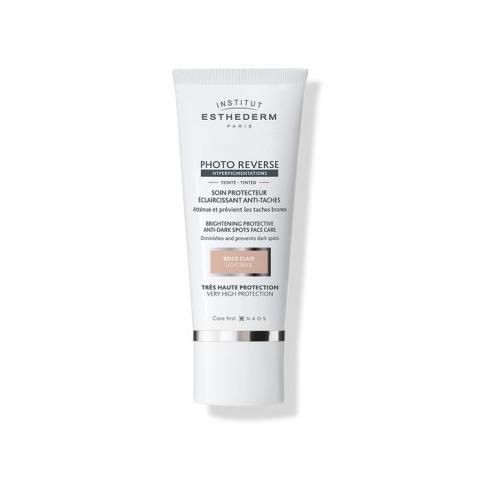
SUN EXPERT LIGHT BEIGE
TLDR
Price:
CA$69.00Product Type:
MoisturizerFinish
NourishedClaims:
Brightening, Calms Skin, For Sensitive Skin, Impoves Skin Barrier, Moisurizing, Softens SkinInstructions
Apply generously to face and neck 20 minutes before going outside.Product Description
Brightening tinted cream: Helps to diminish the appearance of visible dark spots. Its pigmented formula brightens the complexion and hides irregularities.
An enhanced complexion that is visibly more even and radiant. Brightened, hydrated skin and with visibly dimished appearance of dark spots.
PROVEN EFFICACY
The dark spots are covered up: 87%*
The complexion is brightened up: 93%*
The product prevents the appearance of brown spots: 81%*
*Use test on 16 volunteers after 56 days
CELLULAR WATER PATENT (*PATENT ISSUED IN FRANCE)
Water is the main component of a cosmetic product: therefore, its quality is essential. NAOS has designed a perfectly defined water, meeting the three fundamental criteria for physiological fluids: pH, oxidation resistance, and concentration of mineral salts. It optimises cellular functioning and preserves the balance of healthy skin. Components that can contribute to this patent: aqua/water/eau, disodium adenosine triphosphate, carnosine, laminaria digitata extract, aminoethanesulfinic acid, citric acid, as well as mineral salts.
PHOTOREVERSE PATENT (*PATENT ISSUED IN FRANCE)
Over-exposure to solar radiation can cause dark spots to form. This patented complex acts at various cellular levels to regulate the pigmentation process despite sun exposure.
GLOBAL CELLULAR PROTECTION PATENT (*PATENT ISSUED IN FRANCE)
This patented complex optimises the skin’s biological protection mechanisms, in particular its antioxidant properties and ability to protect cellular DNA.
HOW TO USE
Apply generously to face and neck 20 minutes before going outside.
Soft, rich cream
Description
Brightening tinted cream: Helps to diminish the appearance of visible dark spots. Its pigmented formula brightens the complexion and hides irregularities.
An enhanced complexion that is visibly more even and radiant. Brightened, hydrated skin and with visibly dimished appearance of dark spots.
PROVEN EFFICACY
The dark spots are covered up: 87%*
The complexion is brightened up: 93%*
The product prevents the appearance of brown spots: 81%*
*Use test on 16 volunteers after 56 days
CELLULAR WATER PATENT (*PATENT ISSUED IN FRANCE)
Water is the main component of a cosmetic product: therefore, its quality is essential. NAOS has designed a perfectly defined water, meeting the three fundamental criteria for physiological fluids: pH, oxidation resistance, and concentration of mineral salts. It optimises cellular functioning and preserves the balance of healthy skin. Components that can contribute to this patent: aqua/water/eau, disodium adenosine triphosphate, carnosine, laminaria digitata extract, aminoethanesulfinic acid, citric acid, as well as mineral salts.
PHOTOREVERSE PATENT (*PATENT ISSUED IN FRANCE)
Over-exposure to solar radiation can cause dark spots to form. This patented complex acts at various cellular levels to regulate the pigmentation process despite sun exposure.
GLOBAL CELLULAR PROTECTION PATENT (*PATENT ISSUED IN FRANCE)
This patented complex optimises the skin’s biological protection mechanisms, in particular its antioxidant properties and ability to protect cellular DNA.
HOW TO USE
Apply generously to face and neck 20 minutes before going outside.
Soft, rich cream
Ingredients:
- AQUA/WATER/EAU AQUA_WATER_EAU is commonly used as a base ingredient in cosmetics to provide hydration and improve the texture and spreadability of the product. It acts as a solvent for other ingredients and helps to deliver the active components of the product to the skin.
- TITANIUM DIOXIDE (CI 77891) Titanium dioxide (CI 77891) is commonly used as a white pigment in cosmetics and personal care products, providing opacity and a brightening effect. It is found in products such as foundations, sunscreens, and powders, acting as a physical sunscreen agent and helping to protect the skin from harmful UV rays.
- DIETHYLAMINO HYDROXYBENZOYL HEXYL BENZOATE Diethylamino Hydroxybenzoyl Hexyl Benzoate, also known as DEHNBB, is a UV filter commonly used in cosmetics to protect the skin against harmful UV radiation. It helps prevent skin damage, premature aging, and can be found in sunscreens, moisturizers, and other skincare products.
- HOMOSALATE Homosalate is a common ingredient used in sunscreen and other cosmetic products as a UV filter to absorb and block harmful UVA and UVB rays from the sun, providing protection against sunburn and premature aging of the skin.
- DIISOPROPYL SEBACATE DIISOPROPYL SEBACATE is commonly used in cosmetics as a solvent and emollient. It helps to improve the texture and feel of products, while also contributing to their stability and spreadability on the skin.
- ETHYLHEXYL SALICYLATE Ethylhexyl salicylate, a type of organic UV filter, is commonly used in cosmetics as a sunscreen agent to protect the skin from harmful UV radiation. It absorbs UVB rays and helps to prevent sunburn and premature aging of the skin.
- ETHYLHEXYL TRIAZONE ETHYLHEXYL TRIAZONE is a UV filter that is commonly used in sunscreens and other sun protection products to absorb and block UVA and UVB rays. It helps to prevent sunburn and skin damage caused by the sun's harmful radiation.
- C14-22 ALCOHOLS C14-22 Alcohols are commonly used in cosmetics as emollients and thickeners. They help to retain moisture in the skin and give products a smooth and creamy texture.
- GLYCERIN Glycerin is widely used in cosmetics and personal care products due to its hydrating and emollient properties. It helps to attract and retain moisture in the skin, making it a popular ingredient in moisturizers, lotions, and creams. It can also be used as a humectant in
- dipropylene glycol Propylene glycol is a common ingredient used in cosmetics and beauty products as a humectant, moisturizer, solvent, and delivery agent. It helps to keep the products from melting in high temperatures and from freezing in cold temperatures. It also helps to bind the water and oil components of the product together,
- BIS-ETHYLHEXYLOXYPHENOL METHOXYPHENYL TRIAZINE BIS-ETHYLHEXYLOXYPHENOL METHOXYPHENYL TRIAZINE, also known as Tinosorb S, is a chemical sunscreen agent that provides broad-spectrum UV protection by absorbing both UVA and UVB rays. It is commonly used in cosmetic products such as sunscreens, moisturizers, and foundations to help prevent sunburn and protect the skin from harmful UV damage.
- Dimethicone Dimethicone is a silicone-based polymer used as an emollient and skin protectant in cosmetics. It is often used in makeup, lotions, and other skincare products to provide a slippery feeling and to fill in fine lines and wrinkles. It also helps to protect the skin from environmental irrit
- COCO-CAPRYLATE/CAPRATE COCO-CAPRYLATE_CAPRATE is commonly used in cosmetics as a natural emollient and skin conditioning agent. It helps to moisturize and soften the skin, while also providing a light and non-greasy texture to cosmetic formulations.
- DICAPRYLYL CARBONATE DICAPRYLYL CARBONATE is commonly used in cosmetics as an emollient and skin conditioning agent. It helps to improve the texture and spreadability of products while providing a moisturizing effect on the skin.
- Behenyl Alcohol Behenyl alcohol is a fatty alcohol that is commonly used as an emollient and thickening agent in cosmetics products such as creams, lotions, ointments, and gels. It is used to enhance the texture, consistency, and spreadability of products and to provide emolliency and
- SILICA Silica is a common ingredient used in cosmetics as a thickening and absorbing agent. It helps to improve the texture and spreadability of products while also giving a matte finish to the skin.
- TOCOPHERYL ACETATE Tocopheryl Acetate, also known as Vitamin E Acetate, is commonly used in cosmetics as an antioxidant and a skin-conditioning agent. It helps to protect the skin from free radicals, moisturizes, and improves the overall texture and appearance of the skin.
- PENTYLENE GLYCOL Pentylene Glycol is commonly used in cosmetics as a humectant and solvent, helping to retain moisture and improve the texture of skincare products. It also has antimicrobial properties, making it useful as a preservative to extend the shelf life of cosmetic formulations.
- POTASSIUM CETYL PHOSPHATE Potassium Cetyl Phosphate is commonly used in cosmetics as an emulsifier and surfactant, helping to stabilize and blend oil and water-based ingredients together. It is often found in creams, lotions, and make-up products to improve the texture and consistency of the formulas.
- SODIUM STEAROYL GLUTAMATE Sodium Stearoyl Glutamate is commonly used in cosmetics as an emulsifier and surfactant, helping to blend and stabilize the various components of a product while also improving its texture and spreadability on the skin. It is often found in creams, lotions, and cleansers to create a smooth and creamy consistency.
- C12-20 ALKYL GLUCOSIDE C12-20 ALKYL GLUCOSIDE is commonly used in cosmetics as a surfactant and emulsifier, helping to reduce the surface tension of liquids and enhance the mixing of oil and water-based ingredients. It is often found in cleansers, shampoos, and creams as it promotes gentle cleansing and helps create stable and smooth formulations.
- MANNITOL Mannitol is a sugar alcohol used in cosmetics as a thickening agent and a humectant, helping to retain moisture in the skin. It adds texture to formulas and can also act as an antioxidant, protecting against free radicals.
- STEARYL GLYCYRRHETINATE Stearyl Glycyrrhetinate is commonly used in cosmetics as a skin-conditioning agent and brightening agent. It helps to improve the appearance of the skin by reducing redness and promoting a more even skin tone.
- IRON OXIDES (CI 77492) Iron Oxides (CI 77492) are commonly used in cosmetics as colorants, imparting a yellow shade to products such as foundations, eyeshadows, and blushes. They provide a vibrant and visually appealing appearance to the final cosmetic product.
- HYDROXYETHYL ACRYLATE/SODIUM ACRYLOYLDIMETHYL TAURATE COPOLYMER HYDROXYETHYL ACRYLATE/SODIUM ACRYLOYLDIMETHYL TAURATE COPOLYMER is commonly used in cosmetics as a thickening agent, stabilizer, and emulsifier. It helps to improve the texture and consistency of products while also enhancing their overall performance and shelf life.
- HYDROGENATED LECITHIN Hydrogenated lecithin is commonly used in cosmetics as an emulsifier and stabilizer. It helps to improve the texture, stability, and overall performance of skincare and cosmetic products, promoting a smooth and uniform application.
- XANTHAN GUM Xanthan gum is a polysaccharide gum that is used in cosmetics and beauty products as a thickening agent, stabilizer, emulsifier, and suspending agent. It helps to increase the viscosity of a product, preventing separation of ingredients and allowing them to blend together more easily. It
- IRON OXIDES (CI 77491) Iron oxides (CI 77491) are commonly used in cosmetics as pigments to provide a red color. They are found in many makeup products such as eyeshadows, blushes, and lipsticks.
- CAPRYLYL GLYCOL Caprylyl Glycol is a versatile cosmetic ingredient that is commonly used as a moisturizing agent, emollient, and preservative in cosmetics. It helps to condition and soften the skin, while also preventing the growth of bacteria and other microorganisms in beauty products.
- SQUALANE Squalane is a natural, non-toxic moisturizing oil that is derived from a variety of sources. It is light and quickly absorbs into the skin, making it ideal for use in cosmetics. Squalane can be used to help lock in moisture, reduce the appearance of wrinkles, and provide a
- 1,2-hexanediol 1,2-Hexanediol is a humectant, meaning it attracts and binds moisture to the skin. It is often used in cosmetics because it helps to keep the skin hydrated and prevents moisture from evaporating. It is also an emollient, meaning it softens and soothes the
- butylene glycol Butylene glycol is a clear, colorless liquid that is used as a humectant, solvent, and emulsifier in cosmetics. As a humectant, it helps to keep skin hydrated by drawing water from the air or deeper skin layers and locking it onto the surface of the skin.
- SODIUM CITRATE Sodium citrate is commonly used in cosmetics as a buffering agent and pH adjuster. It helps stabilize formulas and control the acidity levels of various skincare and haircare products.
- SODIUM DEXTRAN SULFATE Sodium Dextran Sulfate is used in cosmetics as a thickening and emulsifying agent, helping to stabilize and improve the texture of various skincare and haircare products. Additionally, it can also have moisturizing properties, making it beneficial for hydrating formulas.
- Stearalkonium Hectorite Stearalkonium Hectorite is commonly used as a thickening and stabilizing agent in cosmetics. It helps to improve the texture and viscosity of products such as creams, lotions, and makeup, providing a smooth and creamy consistency.
- PALMARIA PALMATA EXTRACT Palmaria palmata extract is commonly used in cosmetics for its skin-conditioning and moisturizing properties. It helps to improve the overall texture and hydration of the skin, making it a popular ingredient in skincare products such as moisturizers, serums, and creams.
- Maltodextrin Maltodextrin is a common ingredient in cosmetics that helps to improve the texture and feel of a product. It functions as a bulking agent, viscosity enhancer, and skin-conditioning agent.
- HYDROLYZED SOY PROTEIN Hydrolyzed Soy Protein is commonly used in cosmetics as a conditioning agent and moisturizer. It helps to improve the appearance and texture of skin and hair by providing hydration and nourishment.
- CREATINE Creatine is commonly used in cosmetics as an ingredient that helps to improve the skin's hydration levels and promote a smoother and more even skin texture. Its moisturizing properties make it a popular choice in skincare products, particularly in anti-aging formulations.
- PENTAERYTHRITYL TETRA-DI-T-BUTYL HYDROXYHYDROCINNAMATE PENTAERYTHRITYL TETRA-DI-T-BUTYL HYDROXYHYDROCINNAMATE, also known as PTTH, is commonly used as an antioxidant in cosmetics to prevent the degradation of other ingredients caused by exposure to light and air. It helps to extend the shelf life of products and maintain their quality.
- IRON OXIDES (CI 77499) IRON OXIDES (CI 77499) is a commonly used cosmetic ingredient that provides black color to various beauty products such as eyeshadows, eyeliners, mascaras, and lipsticks, adding depth and intensity to the overall look. It is safe for use on the skin and delivers a long-lasting, opaque, and dramatic pigment.
- HYDROLYZED WHEAT PROTEIN Hydrolyzed wheat protein is commonly used in cosmetics as a conditioning agent and film-forming agent. It helps to improve the appearance and texture of skin and hair by providing moisture retention and protection.
- CITRIC ACID Citric acid is a common additive in cosmetics, personal care products, and beauty products. It is used as a preservative, pH adjuster, and exfoliant. As a preservative, citric acid is used to extend the shelf life of products by inhibiting the growth of bacteria and other
- Propylene Carbonate Propylene Carbonate is commonly used as a solvent in cosmetics, helping to dissolve and stabilize various ingredients. It is often found in skincare products, hair care products, and nail polishes.
- POLYSORBATE 60 Polysorbate 60 is a surfactant and emulsifier commonly used in cosmetics. It helps to mix oil and water-based ingredients, stabilize formulas, and improve the texture and consistency of products.
- ANDROGRAPHIS PANICULATA LEAF EXTRACT Andrographis Paniculata Leaf Extract is used in cosmetics for its anti-inflammatory and antimicrobial properties. It helps to soothe and calm the skin, while also preventing the growth of bacteria on the skin's surface.
- AMINOETHANESULFINIC ACID Aminoethanesulfinic acid, also known as taurine, is an amino acid derivative commonly used in cosmetics as a skin-conditioning agent and antioxidant. It helps to improve skin hydration, reduce inflammation, and protect against environmental damage, promoting healthier and more radiant-looking skin.
- dipropylene glycol Propylene glycol is a common ingredient used in cosmetics and beauty products as a humectant, moisturizer, solvent, and delivery agent. It helps to keep the products from melting in high temperatures and from freezing in cold temperatures. It also helps to bind the water and oil components of the product together,
- DISODIUM ADENOSINE TRIPHOSPHATE Disodium Adenosine is a cosmetic ingredient commonly used as a skin-conditioning agent. It helps to improve the texture and appearance of the skin by providing hydration and promoting a smooth and youthful complexion.
- HEXAPEPTIDE-2, Hexapeptide-2 is a peptide ingredient used in cosmetics for its ability to help even out and brighten the skin tone by inhibiting the production of melanin. It is often found in skincare products aimed at reducing the appearance of pigmentation and promoting a more radiant complexion.
Ingredients
- AQUA/WATER/EAU AQUA_WATER_EAU is commonly used as a base ingredient in cosmetics to provide hydration and improve the texture and spreadability of the product. It acts as a solvent for other ingredients and helps to deliver the active components of the product to the skin.
- TITANIUM DIOXIDE (CI 77891) Titanium dioxide (CI 77891) is commonly used as a white pigment in cosmetics and personal care products, providing opacity and a brightening effect. It is found in products such as foundations, sunscreens, and powders, acting as a physical sunscreen agent and helping to protect the skin from harmful UV rays.
- DIETHYLAMINO HYDROXYBENZOYL HEXYL BENZOATE Diethylamino Hydroxybenzoyl Hexyl Benzoate, also known as DEHNBB, is a UV filter commonly used in cosmetics to protect the skin against harmful UV radiation. It helps prevent skin damage, premature aging, and can be found in sunscreens, moisturizers, and other skincare products.
- HOMOSALATE Homosalate is a common ingredient used in sunscreen and other cosmetic products as a UV filter to absorb and block harmful UVA and UVB rays from the sun, providing protection against sunburn and premature aging of the skin.
- DIISOPROPYL SEBACATE DIISOPROPYL SEBACATE is commonly used in cosmetics as a solvent and emollient. It helps to improve the texture and feel of products, while also contributing to their stability and spreadability on the skin.
- ETHYLHEXYL SALICYLATE Ethylhexyl salicylate, a type of organic UV filter, is commonly used in cosmetics as a sunscreen agent to protect the skin from harmful UV radiation. It absorbs UVB rays and helps to prevent sunburn and premature aging of the skin.
- ETHYLHEXYL TRIAZONE ETHYLHEXYL TRIAZONE is a UV filter that is commonly used in sunscreens and other sun protection products to absorb and block UVA and UVB rays. It helps to prevent sunburn and skin damage caused by the sun's harmful radiation.
- C14-22 ALCOHOLS C14-22 Alcohols are commonly used in cosmetics as emollients and thickeners. They help to retain moisture in the skin and give products a smooth and creamy texture.
- GLYCERIN Glycerin is widely used in cosmetics and personal care products due to its hydrating and emollient properties. It helps to attract and retain moisture in the skin, making it a popular ingredient in moisturizers, lotions, and creams. It can also be used as a humectant in
- dipropylene glycol Propylene glycol is a common ingredient used in cosmetics and beauty products as a humectant, moisturizer, solvent, and delivery agent. It helps to keep the products from melting in high temperatures and from freezing in cold temperatures. It also helps to bind the water and oil components of the product together,
- BIS-ETHYLHEXYLOXYPHENOL METHOXYPHENYL TRIAZINE BIS-ETHYLHEXYLOXYPHENOL METHOXYPHENYL TRIAZINE, also known as Tinosorb S, is a chemical sunscreen agent that provides broad-spectrum UV protection by absorbing both UVA and UVB rays. It is commonly used in cosmetic products such as sunscreens, moisturizers, and foundations to help prevent sunburn and protect the skin from harmful UV damage.
- Dimethicone Dimethicone is a silicone-based polymer used as an emollient and skin protectant in cosmetics. It is often used in makeup, lotions, and other skincare products to provide a slippery feeling and to fill in fine lines and wrinkles. It also helps to protect the skin from environmental irrit
- COCO-CAPRYLATE/CAPRATE COCO-CAPRYLATE_CAPRATE is commonly used in cosmetics as a natural emollient and skin conditioning agent. It helps to moisturize and soften the skin, while also providing a light and non-greasy texture to cosmetic formulations.
- DICAPRYLYL CARBONATE DICAPRYLYL CARBONATE is commonly used in cosmetics as an emollient and skin conditioning agent. It helps to improve the texture and spreadability of products while providing a moisturizing effect on the skin.
- Behenyl Alcohol Behenyl alcohol is a fatty alcohol that is commonly used as an emollient and thickening agent in cosmetics products such as creams, lotions, ointments, and gels. It is used to enhance the texture, consistency, and spreadability of products and to provide emolliency and
- SILICA Silica is a common ingredient used in cosmetics as a thickening and absorbing agent. It helps to improve the texture and spreadability of products while also giving a matte finish to the skin.
- TOCOPHERYL ACETATE Tocopheryl Acetate, also known as Vitamin E Acetate, is commonly used in cosmetics as an antioxidant and a skin-conditioning agent. It helps to protect the skin from free radicals, moisturizes, and improves the overall texture and appearance of the skin.
- PENTYLENE GLYCOL Pentylene Glycol is commonly used in cosmetics as a humectant and solvent, helping to retain moisture and improve the texture of skincare products. It also has antimicrobial properties, making it useful as a preservative to extend the shelf life of cosmetic formulations.
- POTASSIUM CETYL PHOSPHATE Potassium Cetyl Phosphate is commonly used in cosmetics as an emulsifier and surfactant, helping to stabilize and blend oil and water-based ingredients together. It is often found in creams, lotions, and make-up products to improve the texture and consistency of the formulas.
- SODIUM STEAROYL GLUTAMATE Sodium Stearoyl Glutamate is commonly used in cosmetics as an emulsifier and surfactant, helping to blend and stabilize the various components of a product while also improving its texture and spreadability on the skin. It is often found in creams, lotions, and cleansers to create a smooth and creamy consistency.
- C12-20 ALKYL GLUCOSIDE C12-20 ALKYL GLUCOSIDE is commonly used in cosmetics as a surfactant and emulsifier, helping to reduce the surface tension of liquids and enhance the mixing of oil and water-based ingredients. It is often found in cleansers, shampoos, and creams as it promotes gentle cleansing and helps create stable and smooth formulations.
- MANNITOL Mannitol is a sugar alcohol used in cosmetics as a thickening agent and a humectant, helping to retain moisture in the skin. It adds texture to formulas and can also act as an antioxidant, protecting against free radicals.
- STEARYL GLYCYRRHETINATE Stearyl Glycyrrhetinate is commonly used in cosmetics as a skin-conditioning agent and brightening agent. It helps to improve the appearance of the skin by reducing redness and promoting a more even skin tone.
- IRON OXIDES (CI 77492) Iron Oxides (CI 77492) are commonly used in cosmetics as colorants, imparting a yellow shade to products such as foundations, eyeshadows, and blushes. They provide a vibrant and visually appealing appearance to the final cosmetic product.
- HYDROXYETHYL ACRYLATE/SODIUM ACRYLOYLDIMETHYL TAURATE COPOLYMER HYDROXYETHYL ACRYLATE/SODIUM ACRYLOYLDIMETHYL TAURATE COPOLYMER is commonly used in cosmetics as a thickening agent, stabilizer, and emulsifier. It helps to improve the texture and consistency of products while also enhancing their overall performance and shelf life.
- HYDROGENATED LECITHIN Hydrogenated lecithin is commonly used in cosmetics as an emulsifier and stabilizer. It helps to improve the texture, stability, and overall performance of skincare and cosmetic products, promoting a smooth and uniform application.
- XANTHAN GUM Xanthan gum is a polysaccharide gum that is used in cosmetics and beauty products as a thickening agent, stabilizer, emulsifier, and suspending agent. It helps to increase the viscosity of a product, preventing separation of ingredients and allowing them to blend together more easily. It
- IRON OXIDES (CI 77491) Iron oxides (CI 77491) are commonly used in cosmetics as pigments to provide a red color. They are found in many makeup products such as eyeshadows, blushes, and lipsticks.
- CAPRYLYL GLYCOL Caprylyl Glycol is a versatile cosmetic ingredient that is commonly used as a moisturizing agent, emollient, and preservative in cosmetics. It helps to condition and soften the skin, while also preventing the growth of bacteria and other microorganisms in beauty products.
- SQUALANE Squalane is a natural, non-toxic moisturizing oil that is derived from a variety of sources. It is light and quickly absorbs into the skin, making it ideal for use in cosmetics. Squalane can be used to help lock in moisture, reduce the appearance of wrinkles, and provide a
- 1,2-hexanediol 1,2-Hexanediol is a humectant, meaning it attracts and binds moisture to the skin. It is often used in cosmetics because it helps to keep the skin hydrated and prevents moisture from evaporating. It is also an emollient, meaning it softens and soothes the
- butylene glycol Butylene glycol is a clear, colorless liquid that is used as a humectant, solvent, and emulsifier in cosmetics. As a humectant, it helps to keep skin hydrated by drawing water from the air or deeper skin layers and locking it onto the surface of the skin.
- SODIUM CITRATE Sodium citrate is commonly used in cosmetics as a buffering agent and pH adjuster. It helps stabilize formulas and control the acidity levels of various skincare and haircare products.
- SODIUM DEXTRAN SULFATE Sodium Dextran Sulfate is used in cosmetics as a thickening and emulsifying agent, helping to stabilize and improve the texture of various skincare and haircare products. Additionally, it can also have moisturizing properties, making it beneficial for hydrating formulas.
- Stearalkonium Hectorite Stearalkonium Hectorite is commonly used as a thickening and stabilizing agent in cosmetics. It helps to improve the texture and viscosity of products such as creams, lotions, and makeup, providing a smooth and creamy consistency.
- PALMARIA PALMATA EXTRACT Palmaria palmata extract is commonly used in cosmetics for its skin-conditioning and moisturizing properties. It helps to improve the overall texture and hydration of the skin, making it a popular ingredient in skincare products such as moisturizers, serums, and creams.
- Maltodextrin Maltodextrin is a common ingredient in cosmetics that helps to improve the texture and feel of a product. It functions as a bulking agent, viscosity enhancer, and skin-conditioning agent.
- HYDROLYZED SOY PROTEIN Hydrolyzed Soy Protein is commonly used in cosmetics as a conditioning agent and moisturizer. It helps to improve the appearance and texture of skin and hair by providing hydration and nourishment.
- CREATINE Creatine is commonly used in cosmetics as an ingredient that helps to improve the skin's hydration levels and promote a smoother and more even skin texture. Its moisturizing properties make it a popular choice in skincare products, particularly in anti-aging formulations.
- PENTAERYTHRITYL TETRA-DI-T-BUTYL HYDROXYHYDROCINNAMATE PENTAERYTHRITYL TETRA-DI-T-BUTYL HYDROXYHYDROCINNAMATE, also known as PTTH, is commonly used as an antioxidant in cosmetics to prevent the degradation of other ingredients caused by exposure to light and air. It helps to extend the shelf life of products and maintain their quality.
- IRON OXIDES (CI 77499) IRON OXIDES (CI 77499) is a commonly used cosmetic ingredient that provides black color to various beauty products such as eyeshadows, eyeliners, mascaras, and lipsticks, adding depth and intensity to the overall look. It is safe for use on the skin and delivers a long-lasting, opaque, and dramatic pigment.
- HYDROLYZED WHEAT PROTEIN Hydrolyzed wheat protein is commonly used in cosmetics as a conditioning agent and film-forming agent. It helps to improve the appearance and texture of skin and hair by providing moisture retention and protection.
- CITRIC ACID Citric acid is a common additive in cosmetics, personal care products, and beauty products. It is used as a preservative, pH adjuster, and exfoliant. As a preservative, citric acid is used to extend the shelf life of products by inhibiting the growth of bacteria and other
- Propylene Carbonate Propylene Carbonate is commonly used as a solvent in cosmetics, helping to dissolve and stabilize various ingredients. It is often found in skincare products, hair care products, and nail polishes.
- POLYSORBATE 60 Polysorbate 60 is a surfactant and emulsifier commonly used in cosmetics. It helps to mix oil and water-based ingredients, stabilize formulas, and improve the texture and consistency of products.
- ANDROGRAPHIS PANICULATA LEAF EXTRACT Andrographis Paniculata Leaf Extract is used in cosmetics for its anti-inflammatory and antimicrobial properties. It helps to soothe and calm the skin, while also preventing the growth of bacteria on the skin's surface.
- AMINOETHANESULFINIC ACID Aminoethanesulfinic acid, also known as taurine, is an amino acid derivative commonly used in cosmetics as a skin-conditioning agent and antioxidant. It helps to improve skin hydration, reduce inflammation, and protect against environmental damage, promoting healthier and more radiant-looking skin.
- dipropylene glycol Propylene glycol is a common ingredient used in cosmetics and beauty products as a humectant, moisturizer, solvent, and delivery agent. It helps to keep the products from melting in high temperatures and from freezing in cold temperatures. It also helps to bind the water and oil components of the product together,
- DISODIUM ADENOSINE TRIPHOSPHATE Disodium Adenosine is a cosmetic ingredient commonly used as a skin-conditioning agent. It helps to improve the texture and appearance of the skin by providing hydration and promoting a smooth and youthful complexion.
- HEXAPEPTIDE-2, Hexapeptide-2 is a peptide ingredient used in cosmetics for its ability to help even out and brighten the skin tone by inhibiting the production of melanin. It is often found in skincare products aimed at reducing the appearance of pigmentation and promoting a more radiant complexion.